What we do

Nutrition improvement for children

Background

Children who are born underweight or do not receive sufficient nutritious food during their first years of life have a much higher chance to die in childhood. If children are able to survive their malnutrition childhood results in a lifelong disadvantage in health as well as the capacity to develop intellectually. While the malnutrition rates for whole countries such as Vietnam and Lao PDR have steadily improved over the last decades, this masks the fact that it remains unacceptably high among ethnic minorities and other marginalized groups. Due to the developmental disadvantages that malnourished children face, they also encounter difficulties when it comes to progressing financially. These obstacles leave them at a young age to grow up as the next generation’s marginalized youth.

Good nutrition is a Child’s Right

Malnutrition in children is strongly correlated with the poverty of their parents and the education level of their mothers. It is a complex problem comprising not only of the access to safe and nutritious food but also awareness and knowledge, food beliefs and taboos, as well as the deteriorating quality of natural resources and global developments in food systems. For many previously self-subsistent ethnic minorities economic development (growing cash crops instead of their own food) and a more ‘modern way of life’ (money to buy junk foods at the market) have made things worse rather than better.

The government of Vietnam has invested big efforts over many years but among ethnic minorities in remote areas the improvement is very slow, if any at all. Therefore NGO’s like MCNV work side by side with government agencies to try out better approaches that fit better to the local contexts.

MCNV’s response

Over the past ten years, MCNV has paid special attention to child malnutrition among ethnic minorities, specifically in the provinces Khanh Hoa and Phu Yen in Vietnam, as well as Savannakhet in Lao PDR. In Phu Yen the focus was on awareness raising and self-help activities in mother groups at the village level. In Khanh Hoa a nutritious cereal powder was developed that was locally produced and distributed by the health system to all families with malnourished children in the district. In Lao PDR the emphasis is on agricultural changes, such as home gardens, fish ponds and small livestock rearing. Positive effects have been demonstrated in several of these pilots but now it becomes urgent to combine the best approaches to find the most effective way to increase the scale in order to reach vast locations.

Future plan

In the coming years MCNV will focus its work on malnutrition in Lao PDR where the problem is most severe. This will be done by systematic learning, taking the experiences in Vietnam and Lao PDR and seeing how the best interventions can be applied using the local context of Lao PDR. Together with the local population, the health, agriculture and education services will need to work together. MCNV will collaborate with researchers from the Free University of Amsterdam and the important national institutes in Vietnam and Lao PDR to produce evidence about effectiveness and sustainability of interventions. This evidence will then be widely disseminated to convince government authorities and policy makers to increase their efforts to increase the number of children who can start their life with more hope for a healthy future.

Read more

Climate change adaptive agriculture & livelihoods

Background

Southeast Asia is one of the regions that will soon be severely affected by climate change. All throughout the region farmers are complaining that the rainy seasons have become more unpredictable and often bring too little rain too late, leading to misharvests.

The combined effect of less freshwater runoff from the Mekong river, due to upstream dams, and rising sea water levels is already leading to increased salinization. In Ben Tre province where MCNV has been working for many years this has become an acute problem for many as the famous Pomelo trees have started to wither away.

MCNV’s responses

Climate change will eventually affect all, but the poor and marginalized are hit hardest and soonest. Therefore MCNV pays special attention to help pilot and promote more climate change resilient forms of agriculture in the areas where we work. Sustainable approaches that stop and revert the deterioration of soil fertility and conserve the use of fresh water are among the most important directions. As long as these methods do not require heavy investments which would per definition ‘exclude’ the poor people to benefit from. At the same time, to stabilise the lives of the poor who are seriously affected by drought and salinity, MCNV offers technical trainings and credit for poor women to start up on alternative income generation activities such as on husbandry and handy craft work. Establishment of new cooperative models for poor women based on their traditional professional strengths and market experience is a new approach that MCNV pilots in Ben Tre province. The cooperatives promises to create more opportunities for the poor because it reduce production cost and more effective in labour utilisation.

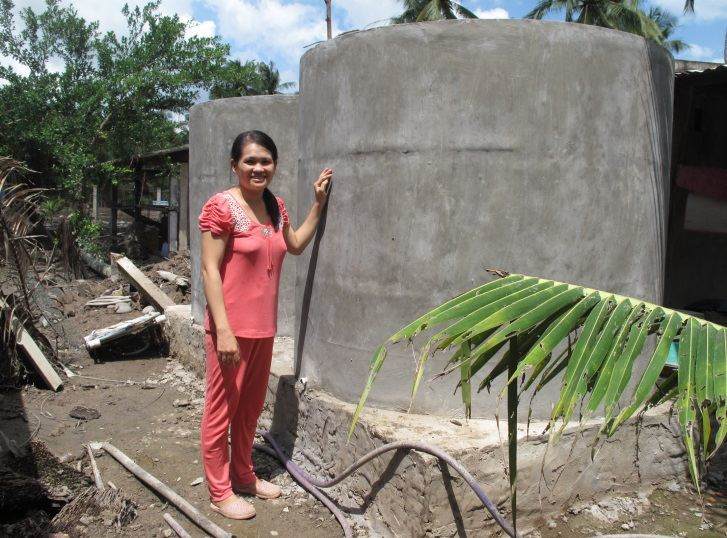
MCNV has responded quickly and effectively with an initiative to support the poor women to build big water container to retain rain water for their cooking needs in dry season right after the drought and salinity happened in early 2016. Up to September 2016, the revolving loans for water container building has been helping 160 household to build 296 containers which could retain total of 829m3 rain water for live needs in drought seasons. The number of poor households which could build containers will increase in coming year as the loans revolves.

The theme of sustainable agriculture is deeply intertwined with the increasing need of producing safe and nutritious food for growing populations. The massively increasing concern about food safety among the more affluent people in urban areas in Vietnam in fact offers new livelihood chances for poor ethnic minority farmers in organic farming. Their land and soils, if kept healthy and unpolluted, may in future become one of their most valuable assets. Luckily there are signs that the agriculture policy makers might turn away from the customary equation of high technology and large scale solutions with ‘development’, where these are still strongly promoted by global agribusiness and agro-chemical corporations.

MCNV is most strongly developing the theme of ‘Nutrition-Sensitive Agriculture’ among some of the most remote and poor ethnic minority farmers in Laos. These areas are too far from urbanized areas and markets and the emphasis must be on sustainable self-subsistence and improving/ restoring the access to nutritious foods, especially for infants and pregnant women, in a context of deteriorating natural resources /forests.

Read more

Sexual & reproductive health for teenager in Huong Hoa

Background

Huong Hoa is a remote district of Quang Tri province, located in the border area Vietnam – Lao PDR. The district has a total population of nearly 80,000 in which above 50% are people from ethnic groups of Pacoh and Bru Van Kieu. In the villages along the border area where MCNV works, out of total population of 12,353 people, there are 1,999 poor households (16.2%) and 9,835 ethnic minority people (79.6%).

The Pacoh and Bru Van Kieu have no written language and have limited access to educational information and quality health services. They mainly live on growing banana, cassava, corn, and some rice, and practice shifting cultivation on the poor highlands. They work hard but obtain insufficient income to afford health and educational services. Similar to other ethnic minority groups in Vietnam, as a consequence of poverty and low awareness, they lag behind in all aspects of the development process.

Problem

As a cultural custom, teenagers of Pacoh and Bru Van Kieu ethnic groups are allowed by their parents to date quite freely, and they are allowed to get married, too, when they are still very young. Having sex is almost unavoidable among teenagers. The problem is that so many of them do not have enough basic knowledge in SRH, putting themselves always at risk of bearing unexpected pregnancy and sexually transmitted diseases (STDs). While SRH is not taught at schools, teenagers in this remote area also have limited access to educational messages about SRH through other channels of information. And even if they are aware of problems related to SRH, they avoid talking about it as it is too much “sensitive” or “private” to talk about.

A baseline survey done with teenagers in this area in 2013 has given shocking data – 56% of teenagers under 16 already experienced having sex, 78% didn’t know how to protect themselves from STDs, 14% of teen-girls got unexpected pregnancy, and 97% didn’t prove that they had enough basic knowledge in contraception.

MCNV’s responses

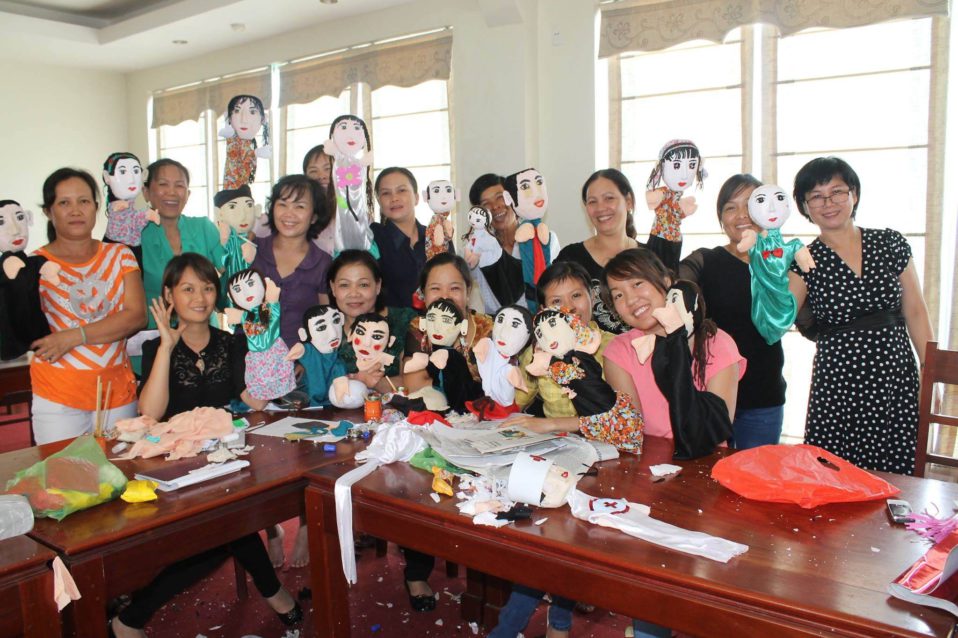
Since mid-2015, MCNV has launched a project to help tackle this problem. We started with co-creation workshops with some groups of active teenagers and village health workers (VHWs) selected from two piloted communes of A Tuc and A Xing. Co-creation workshops enabled the teenagers to get basic understandings about SRH, analyse their real problems, identify practical solutions and come up with an action plan. A story-based approach was applied so that the teenagers could share true stories that happened as a consequence of unsafe sex practices in their community and, with technical support from MCNV staff and the VHWs, re-formulate the stories in the form of shadow drama and puppet shows. The teenagers then presented the shows in combination with community events and interacted with the audiences about SRH aspects related to the stories. The community events were organized every month by the teenagers with the participation of peer/interest groups – youth football clubs, and RAP and hip-hop groups.

In parallel with this way of behavior change communication, some teenagers also volunteered to sell condoms at home, which was more easily approachable to the young people. In contrast, condoms could be easily found at the commune health stations, but the teenagers would never come there to ask for.

Another solution was to use the photo-story telling technique to tell the stories in the form of animations and shared them on the social media to reach and interact more with the online community. We also used a mass instant messaging service to deliver educational messages about SRH for teenagers in this remote area in a weekly basis.

Achievements

One of the most significant change, as revealed from 40 in-depth interviews and 4 focus group discussions recently with the teenagers directly involved in the project, is that they have changed their mindsets, attitudes and behaviours about SRH at teenage and actively communicated with their friends, families and neighbours to raise their awareness about this topic, which they never dared to speak out before.

Four small groups of teenagers, about 10 members each, have produced 4 shadow plays and 4 puppet shows and used them for behavior change communication events and for online communication.

An added value of the project was the increase in the teenagers’ power and motivation to make contribution to the community development, which they thought before to be the adults’ affairs. They have become more united for it, as well. There used to be tensions and conflicts among different groups of teenagers, making them not dare to go from one commune to another for fear of being beaten. Now they have become friends, instead.

Further evaluation will be done in the coming time to see changes in SRH knowledge, attitudes and practices among more than 600 teenagers and older young people in these two communes.

Future plan

We expect to maintain this project in these two communes and upscale it in other three neighboring communes of Huong Hoa district in 2017 and 2018, directly benefiting to about 1,300 teenagers and older young people. In this new phase, we will promote the role of local leaders, parent groups and schools (both high schools and secondary schools) in changing SRH practices among teenagers. In addition, we will collaborate with the district and commune health centres and the Association of VHWs in applying e-health initiatives in SRH communication.

Good practices and lessons learnt from this project will be documented and shared with relevant organisations and networks, such as UNFPA, Barefoot Guide Alliance, ARROW, ADF, WGNRR, and the Vietnam’s health sector and policy makers.

Read more

Women empowerment

Background

Women empowerment refers to the multi-dimensional development that supports and enable women to take control over their lives and control their future. MCNV focuses on the most disadvantaged groups; the poor rural women under the negative influence of climate change, isolated women in mountainous and remote areas, and women living with disability or HIV/AIDS. Among all projects MCNV supported in Vietnam, women empowerment became a cross-cutting theme to guide our work with particular attention to gender issues and women’s development specifically. In Ben Tre province, MCNV implements a specialized Women Empowerment program which focuses on comprehensive support on women, from economical inclusion through microfinance to improving the political participation by women through elections.

MCNV’s responses

Having a cow is a big asset for poor women. The cow helped her to gain more self-confidence and respect from others

Through microfinance projects, MCNV has made inclusive financial services available and accessible to more than 10 thousands women in Vietnam and contributed to positive changes in their lives. Women who live in rural and remote areas bear a double burden, taking care of their family and children while simultaniously generating an income with normal labor. Household burdens limit women when it comes to finding a wage job, this is due to the job locations being in the city, far from their homes and family duties. So self-employment opportunities created by household micro-entrepreneurs allow poor rural women to earn their own livings and at the same time, being able to complete their housework. The Women Empowerment microfinance project in Ben Tre has provided a wide range of inclusive financial services including credit, saving, health insurance, loans for production groups, loans for building water containers (for drought and salinity preparedness), together with financial literary and training for poor women. These services have helped more than one thousand impoverished women better the quality of their lives and increased their income and social status.

Achivements

Monthly credit group meetings is a good opportunity to learn and share among poor women

Monthly credit group meetings is a good opportunity to learn and share among poor women

Through the microfinance and livelihood development activities, women have more changes and solidarity to perform and contribute better in community work. Regular (monthly) meetings enable them to voice their matters; exchange life experience and production knowledge; and learn from each other. That self-learning process was created and maintained by MCNV projects and has become a sustainable mechanism to empower women. Through the years, many at MCNV have witnessed several examples of life improvements. Poor women became more self-confident and more skillful in production and doing business. The neighborhood and relationships were very much improved which enabled women and also men to care about and help each other.

Ben Tre women who joined MCNV capacity training for People Committee election's candidates

Ben Tre women who joined MCNV capacity training for People Committee election’s candidates

A great step forward for women empowerment is the improvement for their political participation. More female delegations in the local government could ensure the rights and voices of women to be heard and respected. Ben Tre province is the first province in Vietnam to have a project intended to improve the successful rate for women in People Council’s election. Online survey tools were also used to collection ideas and data from the field. The successful rate for women in 2016 election had increased to 28% of total People Council comparing to 22% in the last election in 2011.

Future direction

Enhancing the ongoing women empowerment efforts and sharing our experience widely to other provinces in Vietnam as well as to other countries is the target. We are now cooperating with the Center of Women and Development to start a media development project which could film the best practices and methods in this field and share the experiences widely throughout social network to advocate for women’s development.

Read more

Civil Society Development

Background

Civil Society embraces the general public at large, representing the social domain that is not part of the State or the market. Civil Society is a sphere where people combine their collective interests to engage in activities with public consequence. The increasingly accepted understanding of the term Civil Society Organisations (CSOs) is that of non-state, not for-profit, voluntary organizations formed by people within the social sphere of civil society. These organisations draw from community, neighbourhood, work, social and other connections.

The Disabled People’s Organisation (DPO) encouraged disabled people to share their dreams, to develop personal plans, and to help them to make those dreams and plans come true. As an organisation we grew our capabilities to support the holistic development of individuals, families and groups of people with disabilities (written by a disabled person from a village in Quang Tri Province during a reflection session in 2015).

MCNV’s response

MCNV has increasingly strengthened and cooperated with CSOs over the years. CSOs have become an increasingly common channel through which we assist elderly, women with HIV/AIDS, ethnic minorities, youth and People with a Disability (PWD) to exercise citizenship and contribute to social and economic change. The involvement of Community Based Organisations that are organised by the marginalised people themselves, ensures their full participation in our programs.

Besides working with a myriad of Community Based Organisations in Lao PDR and Vietnam, MCNV also collaborates with civil society organisations at provincial and national level. For example, MCNV has established and cooperates with provincial ‘Village Health Workers Associations’(VWHAs).

In the health system we are so close to villagers that people call us the “long arm” of the health sector. Our Village Health Workers Association was founded in 2006, and now has 1,115 members based in 138 communes in nine districts and towns of the province. On basis of our experiences in Quang Tri, two other Village Health Workers’ Associations have been established in Cao Bang and Phu Yen provinces, in 2010 and 2011. We for example support the Disabled People’s Organisations (DPO) and Old People’s Organisations (OPA) in fundraising activities. We also assist the Community Based Organisations to prepare dramas or to make video clips to lobby and advocate for better health practices and policies (Interview with Board Member of Village health Workers Association, 2015).

Achievements

To date, MCNV has strengthened and collaborated with over a hundred CSOs and CS movements in Lao PDR and Vietnam. In addition to that, MCNV has provided Technical Advice to Civil Society Partners in Sri Lanka, Tajikistan and Georgia, on the strengthening of Civil Society Organisations in their country.

Through CBOs and their clubs, peer-to peer support is channelled and improvements in policy implementation and policy development are lobbied for. For example, Old People’s Organisations in Quang Tri successfully lobbied for an increase of the district budget for health of the elderly.

Due to the flexible characteristics of CSO organisations and due to their profound local knowledge on the culture and values of communities in remote areas of Lao PDR and Vietnam, they are in an excellent position to collaborate with other societal groups in experimenting new approaches in health and sustainable livelihood. For example in Lao PDR, the CBOs at village level named ‘Village Development Committees’ (VDC) have been partners of the district department of agriculture in experimenting new rice varieties, cattle raising and fish ponds.

Trust relationships between villagers and district partners has improved. The VDCs are able to articulate the needs of the ethnic minority groups in the villages and this has led to more communication and achievements of program interventions in the villages. (Interview with consultant evaluating the program in Lao PDR, 2014).

Read more

Support women living with and affected by HIV

Background

HIV/AIDS epidemic has become the most emerging public health problems in Vietnam since 1990s. By the end of year 2015 there was a total of 227,000 people living with HIV while more than 75,000 people have died from AIDS. In estimation about 14,000 new cases of HIV are founded every year.

During 12 years working in HIV/AIDS area, MCNV had a considerable contribution to Vietnam HIV/AIDS situation in establishing and providing support to a community – based organization of women who are living with HIV, called Sunflowers, in seven Northern provinces in Vietnam. The program has contributed to improving access to health care for women living with HIV because of the strengthened referral system.

MCNV’s responses and achievements

Beginning in 2004, a group of women living with HIV was established by MCNV’s support. The simple aims were to ensure that, if pregnant, women can access to information and medicine that would help to prevent the transmission of HIV from mother to child. This initial pilot was successful in achieving its goals, and with the generous support of the Royal Netherland Embassy, it was scaled-up to a further three provinces between 2006 – 2009. In its third phase these achievements were consolidated and the model adapted to suit the needs of people living in remote mountainous regions. Then the program covers seven provinces and the Sunflowers group supports over 1,500 women living with or affected by HIV/AIDS and their families.

The Sunflowers groups help to ensure that they can overcome the barriers and obstacles they face to live active and fulfilled lives. This support comes in many forms, it includes: counselling and care at home and in hospitals, support to secure stable livelihoods, assistance with children’s education, and engagement with the community to reduce stigma and discrimination. Over more than 12 years the program has demonstrated that when women living with HIV work together their confidence and self-esteem increases enabling them to become powerful advocates for change and developments.

From 2012, after handing over, the network of Sunflowers had worked more independence with its own steering board of national level, and leaders of each provincial group. The Sunflowers are maintaining supports in improving health care access, income generating, and social by monthly meeting, revolving fund, and many supportive events. From this period, overcoming difficulties, Sunflower maintains its groups and networks with many valuable activities. More than 1,100 women living with HIV frequent attend the monthly meeting. Living with poor health status, many leaders of Sunflowers cannot be able to have a longer contribute to their group. Sunflower have refreshed themselves by changing most of group leaders and Network leaders and its structure.

In addition, MCNV provides health care insurance to Sunflower members, therefore, 100% of women living with HIV are protected by health insurance. The program also organizes vivid trainings to cultivate skills and knowledge to Sunflowers and their family members. Specifically, parenting skills were provided to grandparents who are raising orphan children. The training, such as hepatitis C prevention, ARV therapy, pig raising skills have been delivered to members of the Sunflower groups.

Future plan

Currently and in a couple of year MCNV is providing technical and a little financial supports, which is enabling the Sunflowers to be strengthened, and capable to work more independently as a Community Based Organization of women living with HIV, to bring support to women living with HIV continuously.

Read more

Mental Health

Mental Health (MH) disorders significantly contribute to the worldwide burden of diseases. The health services and policies in Vietnam pay only limited attention to MH.

Read more

Development of occupational therapy in Vietnam

Background

Rehabilitation has been developed in Vietnam for more than 40 years; it is still a big gap of Occupational Therapy (OT) development. The main rehabilitation practice in Vietnam is Physical Therapy (PT), yet there are currently no qualified occupational therapists in Vietnam. OT services are provided by physiotherapists with minimal clinical training in OT, or by occupational therapists from other countries who come for short periods. It is only available in a few large hospitals. Specific OT services were unavailable for mental rehabilitation, elder care, home-based care, school-based services for children with special needs, etc. The faculty (PT and Rehabilitation doctors) may not be well-equipped to teach OT in depth, due to lack of experience, equipment, and resources, limited information from books, especially those written in English. In addition to the lack of qualified OT doctors, those qualified with Masters to teach OT are not available in Vietnam. The participants of OT training survey were of the unanimous opinion that OT education needs to be commenced in Vietnam.

Being aware of the fact that OT is essential to provide comprehensive rehabilitation services, the Ministry of Health (MOH)’s orientation of rehabilitation development up to year 2020 stated that OT is one of specialized fields in rehabilitation. It is obligatory to establish Occupational Therapy Departments in Rehabilitation Hospitals as well as Provincial General Hospitals.

MCNV’s responses

In October 2015, MCNV received a fund from USAID to run a 5 – year project of OT training development in Vietnam. The project’s goal is to create the foundation and necessary conditions in order to develop the training system of professional OT in Vietnam, including the provision of OT trainers, competency-based training curriculum and OT-related policies. Specific objective of this project as follows:

  • To develop a group of capable OT trainers in HMTU and UMP HCMC.
  • To develop a 4-year competency-based OT curriculum at a regional level.
  • To pilot an OT Bachelor training course in HMTU and UMP HCMC
  • To set up two OT units for practicing during training procedure.

To implement this project in the context of having no OT experts and trainers, MCNV already approached School of Allied Health Sciences, Manipal University (SOAHS – MU), India to ask for technical support during the project implementation. Two universities in Vietnam were involved in this project including Hai Duong Medical Technical University (HMTU) and University of Medicine and Pharmacy, Ho Chi Minh City (UMP HCMC). The project has also received strong supports from Administration of Medical Service and Administration of Science Technology and Training, MoH.

Achievements so far

After almost one year conducting the project, the following results have been achieved:

  • Sending a group of 4 or more trainers from HMTU and UMP HCMC to one-month orientation course on OT in SOAHS – MU.
  • Sending a group of 5 Physical Therapists to an English course and Bachelor of OT course (BOT) in SOAHS – MU.
  • Sending a group of 6 key persons from MoH, HMTU, UMP HCMC and MCNV to the study tour on OT in SOAHS – MU.
  • Develop the BOT program outlines for full-time and part-time training courses
  • Develop the Syllabus of part-time BOT program which will be piloting at HMTU and UMP HCMC in year 2017.

In the coming years, MCNV will continue to run the program as planned to reach all objectives.

Read more

Microcredit and income insurance

Microfinance – A sustainable engine for development

Background

Impacts of microfinance to the poor

Impacts of microfinance to the poor

At the heart of the Sustainable Development Goals (SDGs) is a commitment “to eradicate poverty everywhere, in all its forms and dimensions by 2030”. Inspired from this goal, all MCNV programs in Vietnam are committed to contribute to poverty alleviation efforts by integrating microfinance tools to support marginalized groups who are normally the poorest in their community. Over the past 10 years, MCNV has disbursed micro finance services including loans for production and water retention, savings, and health insurance, to more than 7000 households with the total value of more than 650,000Euro in programs in Vietnam.

Microfinance has proved to be one of the most powerful engines in the global effort to end the crushing poverty that deprives hundreds of millions of the world’s people of sustenance and hope. Microfinance gives poor people the opportunity to establish an existence and to create a future with prospects.

MCNV loan allow her to build water containers to save rain water to prepare for draught and salinity

MCNV loan allow her to build water containers to save rain water to prepare for draught and salinity

Micro loans, saving and other financial services in combination with financial literacy trainings could greatly help the poor start-up their micro-businesses to generate income . This would provide the clients and their families with greater qua
ntities and more nutritious foods, education for their children and to the opportunity to improve their houses. Consequently, microfinance has an impact on the future generations.

Microfinance has a positive impact far beyond the individual household. Jobs are created, knowledge is shared, civic participation increases, and women are recognized as valuable members of their families and communities. Microfinance could also improve the community solidarity and connection between people.

An equally important part of microfinance is the revolving mechanism in using funds from donors so if microfinance is managed well, it could allow a certain amount of funding to serve more and more poor families. These funds would be more beneficial longer term so the impacts will be multiplied in comparison with other kind of development grants.

An extreme poor old lady received a friendship house built from MCNV microfinance projects in Ben Tre 2015

An extreme poor old lady received a friendship house built from MCNV microfinance projects in Ben Tre 2015

Micro-entrepreneurship is the key for the poor’s self-empowerment. It turns the poor from a passive and weak role in the development process to active agents of change. The personal talents and community support are fully mobilized for business development and this process is the best capacity building for those who are poor. Microfinance directly impacts and benefits women’s empowerment since microfinance particularly focus on women and gradually consolidates the role and capacity of women in family and in the community.

Future plan

In recent decades, the microfinance crises have showed that microfinance could harm the development if being used in an extreme way. So MCNV is making its effort to balance the social and financial performance of microfinance projects by using Social Performance Management (SPM) system. Applying the SPM permits microfinance assist the poor to escape poverty while ensuring the whole microfinance system runs as healthy as a double bottom-line financial institute.

MCNV also wants to share and expand the best practice in microfinance and social performance management to other organizations and communities. We look forward to like-minded partners and donors to promote the real microfinance with focus on social performance and sustainability.

Read more