
Blog

Nutrition sensitive agriculture in Lao PDR and Vietnam

Background

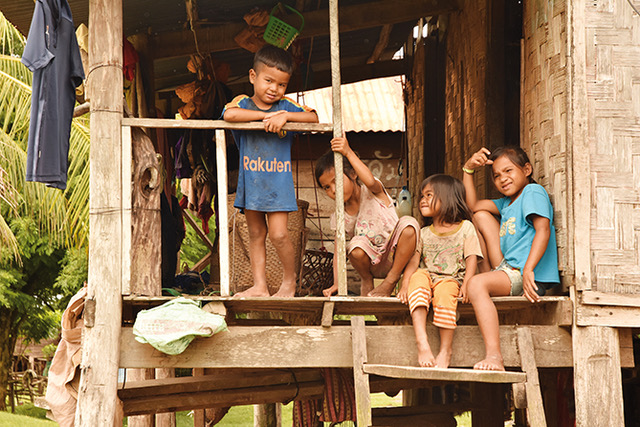
Despite significant development progress in recent years, hunger remains a significant problem in Lao PDR, with 44% of children under 5 years old being malnourished placing their lives at risk and damaging their lifelong health. This issue is particularly severe in Nong District, one of the poorest areas in Lao PDR, and where the people can suffer food shortages for many months in the year. To tackle these problems MCNV takes a nutrition-sensitive approach to its agricultural and livelihoods work within some of poorest villages in the district.

MCNV’s responses

This approach seeks to maximize agricultures contribution to nutrition and recognizes the multiple benefits derived from enjoying a varied and nutritious diet, the social significance of food and the importance of agriculture in supporting rural livelihoods. Instead of focusing exclusively on crop production for the market, villagers use their land to cultivate a variety of commodities including fruits, vegetables, small livestock and fish. In Nong, MCNV has supported this approach by supporting the development of fish ponds, providing seeds and equipment for home gardens and strengthening village veterinary services to ensure healthy livestock. MCNV’s approach to agriculture also entails promoting gender equity, and providing nutrition education so that household resources are used to improve nutrition, especially that of women and young children. For example, the approach looks at the division of labour between men and women, to ensure mothers have enough time to breastfeed their infants. Finally, MCNV adopts a multi-sectoral approach to nutrition linking agriculture to sectors that address other causes of malnutrition, namely education, health and social protection.

Achievements

Through working in partnership with organisations ranging from village development committees to the Ministries of Agriculture, MCNV has improved agricultural production whilst preserving the soil, land and water that villagers depend upon, but most importantly it has helped to reduce hunger and malnutrition improving the health of children with lifelong benefits.

Future direction

In the coming years MCNV is working with the Food and Business Knowledge Platform and VU University in the Netherlands to conduct research into the impacts of nutrition-sensitive agriculture to ensure that it can be scaled-up so many more people in Lao PDR and elsewhere can benefit from this approach.

http://knowledge4food.net/research-project/scaling-up-nutrition-sensitive-agricultural-initiatives-in-vietman-and-laos/

Read more

MCNV’s 40-years history

In 1968, the Dutch medical doctors Professor Jaap de Haas, Dr. Nick van Rhijn and Dr. Fred Groening founded the Medical Committee Netherlands-Vietnam. They were indignant about the Americans’ technological warfare in Vietnam and distressed by the suffering of the Vietnamese people.

Read more

MCNV Magazine 2016-04

Link to MCNV Magazine 2016 number 4 (magazine in Dutch).

Read more

Learning through health research

Background

Research is vital for informing and underpinning MCNV’s interventions and ensuring that we can understand their impact. It also helps to ensure that knowledge is generated to inspire new ideas, catalyse innovations, and provide evidence to policy makers to inform their decision making and help ensure that policies are effectively implemented. The publication of research also helps to inform others of new processes, methods, techniques and ways of thinking that contributes to improved ways of working to reduce poverty and improve health.

MCNV’s responses

In Lao PDR, MCNV runs the LEARN (Lao Equity through policy Analysis and Research Networks) this a 5 year program that is funded by the EU Commission to enhance the capabilities of public health institutes in Laos. Working together with a range of partners the program aims to ensure that the Laos National Institute of Public Health becomes of centre of excellence for the provision of evidence-based and contextually adapted policy advice. This evidence is used to enhance decision making and improve the implementation of health policies both within Laos and the wider Greater Mekong Sub-region (GMS)

LEARN brings together a unique range of partners to achieve this goal. As well as the Laos National Institute of Public Health, LEARN also brings together the University of Health Sciences in Laos, the VU University in the Netherlands, the Hanoi School of Public in Vietnam and MCNV, an international NGO that has been working in the health sector in the GMS for many decades.

These partners come together to help ensure that:

  • Effective and convincing evidence is available to policy-makers who are better able to use it for policy making and programming
  • The National Institute of Public Health and its partners have increased access to finance, skilled human resources and information.
  • Researchers are able to produce high quality research and are able to convincingly present results and recommendations to a wide range of stakeholders.

Expected results

During its 5 year implementation the program will support a range of activities including;

  • International scholarships for Lao researchers to gain Phd’s
  • A joint Masters in Public Health Program between University of Health Sciences and Hanoi School of Public Health
  • Upgrade of IT facilities and introduction of public health e-learning resource centre
  • A research grant scheme to support the production of high quality research with Laos
  • Development of a long-term strategic plan for National Institute of Public Health
  • A wide range of workshops and trainings in areas ranging from ethics, transdisciplinary research practice, and production of policy briefs.

In addition to this major project, MCNV also conducts research in a wide range of areas including the impact of its agricultural interventions on nutrition and how these can be scaled-up, the use of IT in development, the control and prevention of malaria, the effectiveness of self-help groups in empowering people living with HIV and examining barriers to policy implementation in areas as diverse as the provision of mental health services and access to mother and child healthcare. Research is often conducted in partnerships with Dutch Universities such as VU University. The research is action-based and reflective and is designed to ensure that all people are involved in the process, for complex issues such as malnutrition, multiple stakeholders and engaged in the research and transdisciplinary approaches are used. MCNV’s works in research helps us to understand better the world around us and ensures we can support people within development processes to make the world a better place.

Read more

MCNV and AFAS Foundation unite against malnutrition in Laos

On November 4th MCNV and AFAS Foundation signed a collaboration contract in Amsterdam. A contract on rural development and food security in the coming years in Laos.

Read more

MCNV launched “Learning from the use of Innovative Communication Methods” project in Lao PDR

From 20th to 24th of March 2017, MCNV Laos organised a traning of trainers followed with a formulation workshop in Vientiane Capital to officially launch the project Learning from the use of Innovative Communication Methods” (LICM). Participants to the event were 18 key persons from three project partners – Lao Disabled People’s Association (LDPA), Vientiane Youth Centre for Health and Development (VYCHD), and Proud To Be Us (PTBU), an informal network of LGBTI people in Lao PDR. Also attending the event were representatives of the National Institute of Public Health, University of Health Sciences, UNFPA and OXFAM Laos.

LICM is an action research project that aims to enable local partners to learn about the potential of creative methods in improving sexual and reproductive health and rights (SRHR) of vulnerable youth groups and as a tool to study specific SRHR challenges these groups face. Young girls working in garment factories, LGBTI people and disabled youth are the project’s target groups. The project also investigates if and how the use of innovative communication methods can enhance dialogue on SRHR issues between communities, vulnerable youth and policy makers.

The training of trainers has provided participants with basic techniques and insights about some forms of creative communication such as theatre, shadow drama and participatory video for peer learning, behavior change and advocacy in relation to SRHR issues. With more technical support from MCNV, the project partners (LDPA, PTBU and VYCHD) will formulate co-creative teams, develop creative communication products with different methods, organise communication events and involve policy makers in dialogue on SRHR issues.

Read more

Towards improvement in inclusive education for children with disability

On December 12th 2016, the Department of Education and Training (DoET) of Quang Tri Province, MCNV and the Korean INGO Medipeace co-organized a workshop to share results of an assessment on inclusive education (IE) for children with disabilities (CWD) recently done in the province. Participating in the workshop were representatives of provincial- and district-level organisations of the education sector, labour, invalids and social affairs sector, health sector and finance sector, the Disabled People’s Association, the Village Health Workers’ Association, the Charity Association and some INGOs. Besides sharing the IE assessment results, the DoET of Quang Tri Province, MCNV and Medipeace also consulted the relevant parties about the proposed plan on IE development in Quang Tri in the period of 2017-2020.

Earlier in October and November 2016, MCNV provided technical support to and collaborated with the DoET of Quang Tri to do a survey in Cam Lo, Gio Linh and Huong Hoa districts and Dong Ha city to assess the current situation of IE. The assessment results would be used for the orientation of interventions in improving the IE work in Quang Tri. Statistics show that Quang Tri province has about 37,000 people with disabilities, in which there are more than 6,300 CWD, counted for 1.1% of the population. Key findings from the assessment unveil that the education sector and other relevant sectors currently face a lot of challenges in the IE for CWD, particularly in implementing the supporting policy, ensuring financial sustainability, multi-sectoral collaboration, building capacity for teachers and parents of CWD, and improving the participation of CWD at schools. Key solutions identified and agreed upon at the workshop include: (i) setting up and developing a sustainable system of technical assistance and provision of early intervention and education services for CWD; (ii) transforming the current special education school into a support centre for IE; and (iii) strengthening human resources and capacity for the relevant organisations.

Read more

a.s.r – Dutch insurance company to pilot a “Community Income Protection Insurance” for poor women in Ben Tre province

Climate change and saline intrusion in the Mekong Delta, Vietnam has caused negative impacts for millions of inhabitants who live in coastal areas. Poor families who live on fisheries and agricultural production have suffered from income loss due to less yield crops and worsening health conditions.

Read more